AI for accounting firms,
built for liquidation work.
We build AI for accounting firms that run liquidations and insolvency cases. Your team tracks each case from one screen, from the first asset to the last creditor payment. We fit the software to your registers, your controls and the way your partners review.
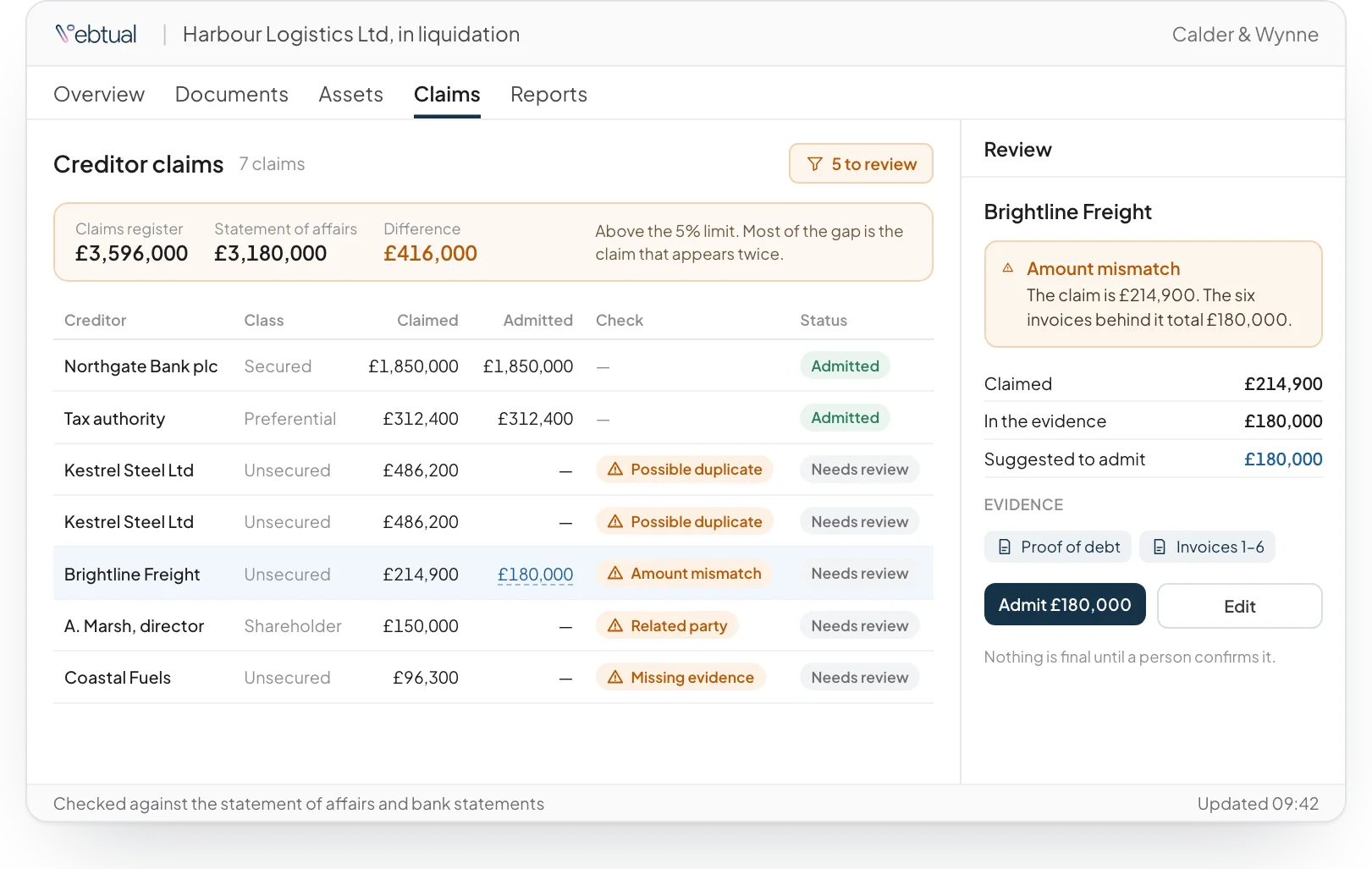
Where your team's time goes on a liquidation
Registers built by hand
Staff key in asset and claim records from statements and letters. On a large case, the registers can take weeks.
Claims checked one by one
Duplicates and wrong amounts are easy to miss. One wrong admission costs creditors money and puts the firm's name at risk.
Reports already out of date
Creditor reports are rebuilt from spreadsheets each time. By the time a report goes out, its figures may not match the registers.
Built with an accounting firm that runs liquidations
“They didn't just build to a rigid spec sheet; they actively adapted to our feedback.”
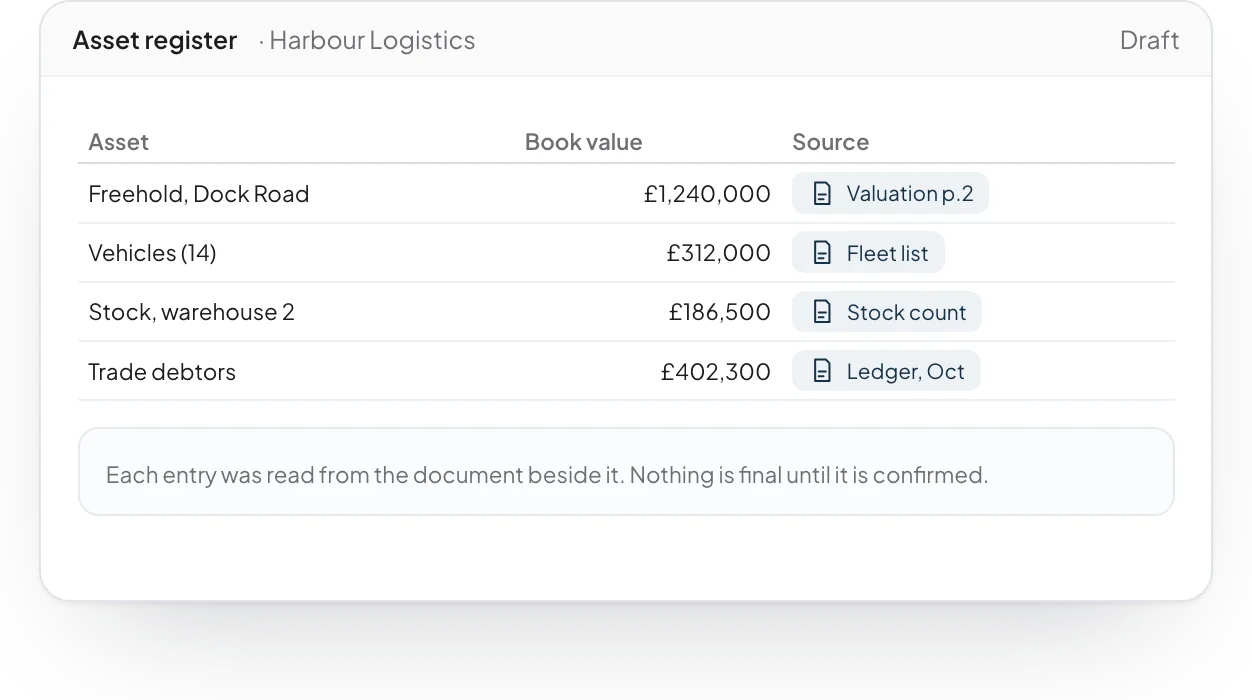
Registers built from the records
Asset and claim registers are drafted from the case documents. Each entry links to the record it came from.
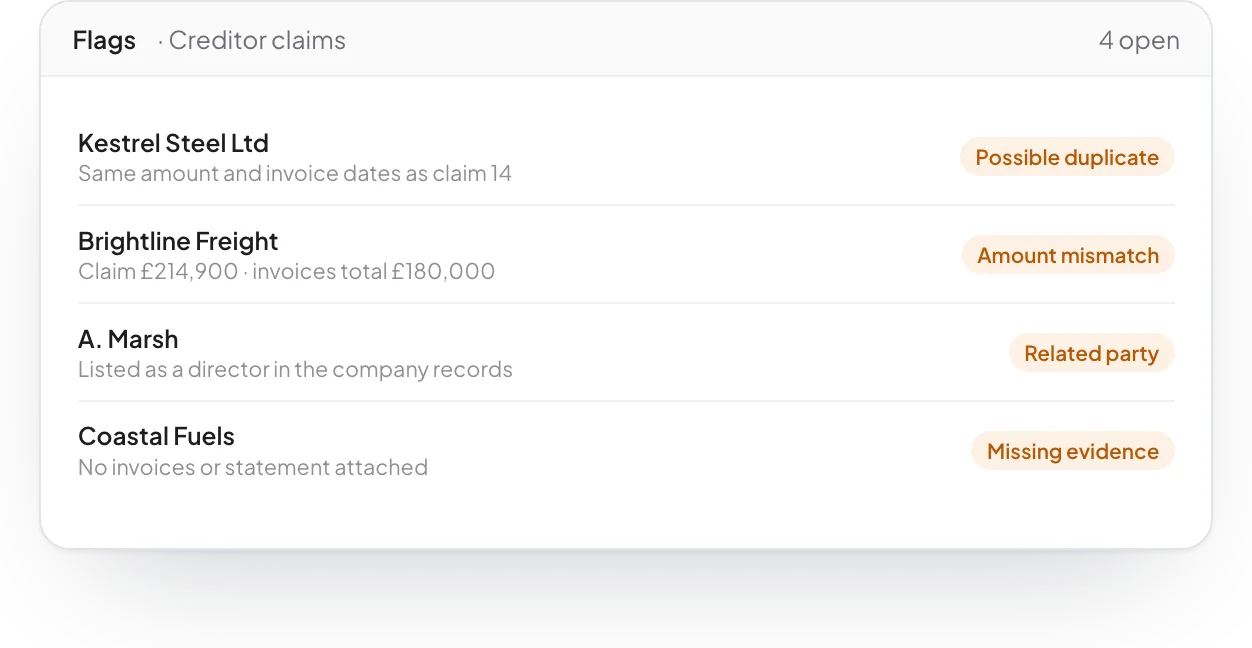
Every claim checked before it is admitted
Possible duplicates, amounts that differ from the evidence and related parties are flagged before anyone signs off.
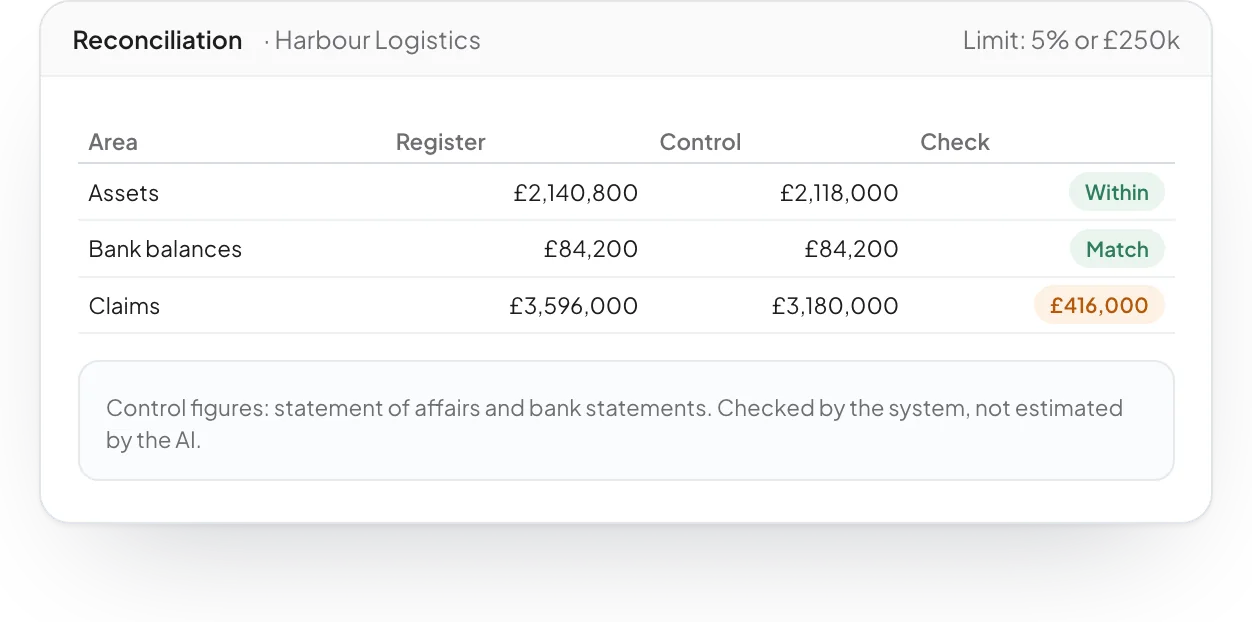
Totals that match the control figures
Register totals are checked against the statement of affairs and bank statements, with a limit your team sets.
Creditor reports from live figures
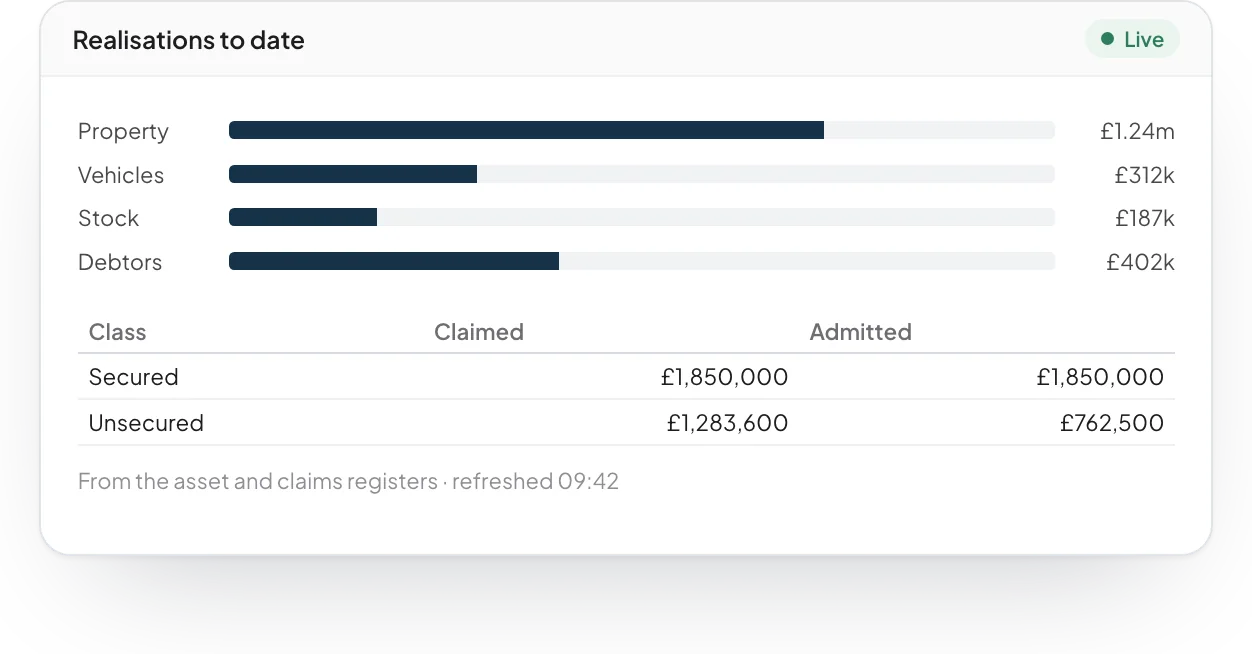
Progress reports pull their tables and charts from the registers, so the numbers creditors see are always current.
Solutions for insolvency teams
Built around how your team runs a case.
We start from software we have already built and tested, then fit it to your registers, your controls and the way your team reviews.
How is AI used in accounting firms?
Accounting firms use AI for the repetitive work behind each engagement. In liquidation work, ours builds registers from the case records, checks each claim and prepares creditor reports from live figures.
Can AI do accounting work on its own?
No. AI can prepare and check much of the routine work, but a qualified person still reviews it. In our software, your team admits, edits or rejects each entry.
What does it do in a liquidation case?
It drafts asset and claim registers from the case documents, flags claims that need a closer look and checks totals against the statement of affairs and bank statements. Progress reports take their figures from the registers.
Does it check creditor claims?
Yes. It flags possible duplicates, amounts that differ from the evidence and related parties before anyone signs off.
Where is our data hosted?
The software runs on Microsoft Azure, in a region you choose for your legal and security needs. Before go-live, we map where each part of your data is stored and processed, including backups and AI processing.
Is our data used to train AI models?
No. Your documents, prompts and outputs are not used to train shared AI models. We choose AI services whose terms do not allow training on customer content.

See it working on a case like yours.
Tell us about your organisation and the work you want to move faster. We will show you the software on an example close to yours, and how we would fit it to your systems.